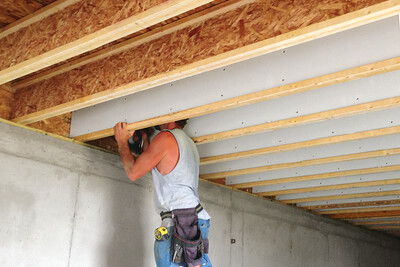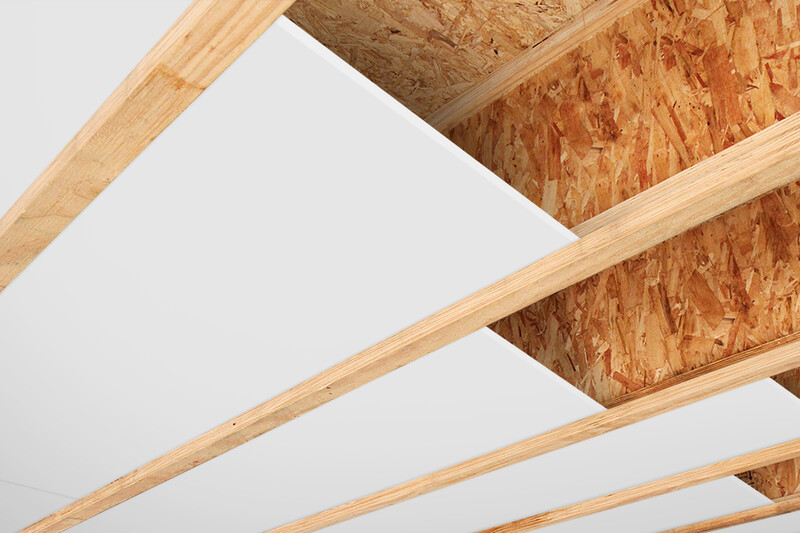
While no building is truly fireproof, fire-resistive construction can make a building firesafe. Engineered wood products offer proven fire performance, design flexibility and a wide range of code-accepted assemblies for meeting one- and two-hour fire-resistance requirements. In many cases, ordinary wood-frame construction with wood structural panel sheathing provides ample fire safety and is acceptable. Explore APA’s technical resources and guidance to learn more about fire-rated systems and assemblies for engineered wood construction.
Understanding the distinctions between common fire safety terms is essential for designing and specifying fire-rated systems.
Fireproof vs. Firesafe: No building is truly fireproof, but a firesafe building is achievable. Proper fire-resistive construction gives occupants time to discover a fire, suppress it and evacuate safely.
Fire-Resistance-Rated (Fire-Rated) Assemblies: A fire-resistance rating measures how long a structural assembly can support its design load without collapsing or transmitting flame. This rating is expressed in hours and determined through standardized testing according to ASTM E119 or UL 263.
Fire-Retardant-Treated (FRT) Wood: Wood impregnated with fire-retardant chemicals to reduce surface flame spread, achieving a flame spread index of 25 or less, per ASTM E84 or UL 723.
FRT ≠ Fire Rating: FRT treatment and fire-resistance ratings are not the same thing. FRT reduces flame spread but does little to contain fire under intense heat and cannot be substituted for rated components in a UL fire-rated assembly.
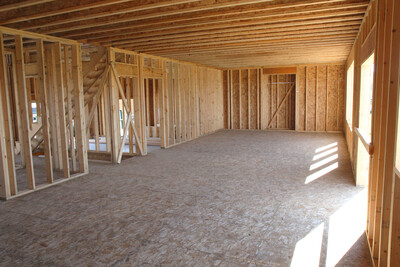 Technical Guides - W305
This publication is a guide to cost-effective fire-rated wood and wood structural panel systems that meet code requirements
Technical Guides - W305
This publication is a guide to cost-effective fire-rated wood and wood structural panel systems that meet code requirements
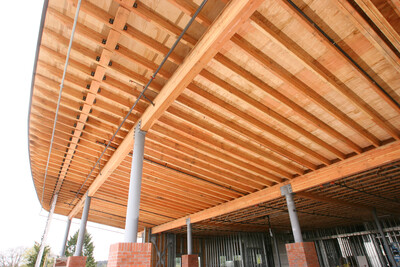 Excerpt - E30X-AFBS
Summary of special systems, including fire resistant construction, fire protected assemblies, wind-resistive roofs, energy conservation and panels over metal framing
On-Demand Webinar
Learn fire-rated systems in wood-frame construction. Earn 1 AIA HSW/LU and 0.1 ICC CEU.
Excerpt - E30X-AFBS
Summary of special systems, including fire resistant construction, fire protected assemblies, wind-resistive roofs, energy conservation and panels over metal framing
On-Demand Webinar
Learn fire-rated systems in wood-frame construction. Earn 1 AIA HSW/LU and 0.1 ICC CEU.
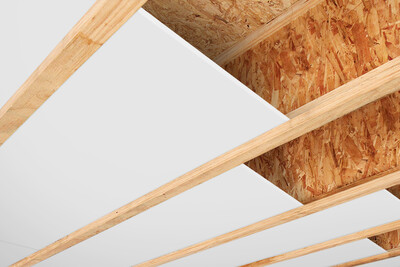 Construction Guide - R425
Describes several options that satisfy fire-protection provisions of the 2012, 2015 and 2018 IRC related to I-joist floor systems, including construction details
Construction Guide - R425
Describes several options that satisfy fire-protection provisions of the 2012, 2015 and 2018 IRC related to I-joist floor systems, including construction details
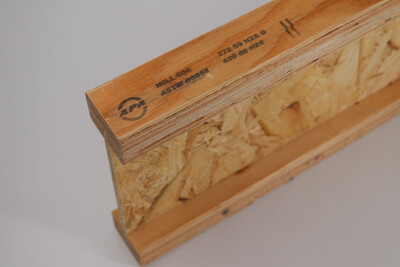 On-Demand Webinar
Explore fire-protective membrane requirements for I-joist floor systems.
On-Demand Webinar
Explore fire-protective membrane requirements for I-joist floor systems.
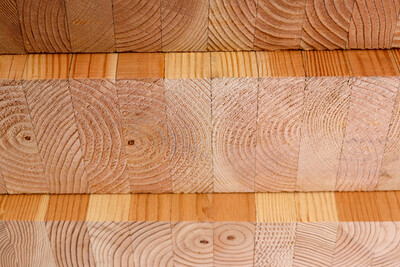 Technical Note - Y245
This publication describes the natural fire resistance of glulam beams and columns and provides fire endurance calculation methods
Technical Note - Y245
This publication describes the natural fire resistance of glulam beams and columns and provides fire endurance calculation methods