Rim Board

An Integral System Component

House-Construction

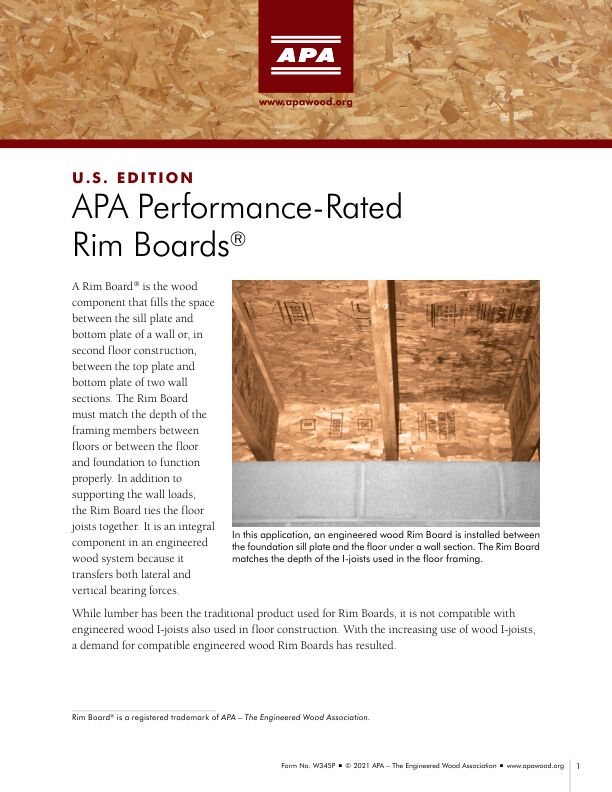
Engineered Wood Rim Board: Built for Modern Wood Construction

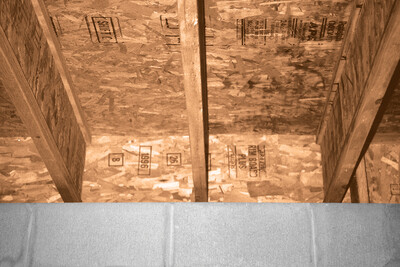
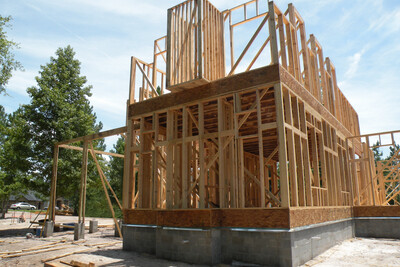
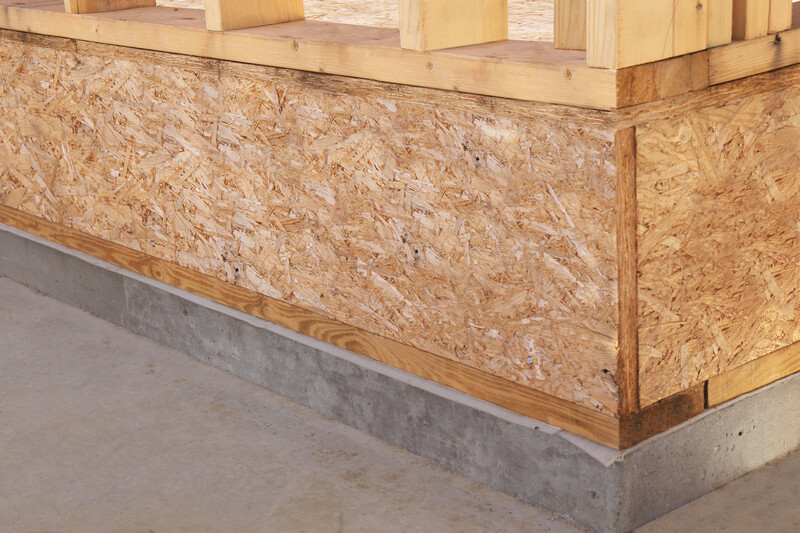
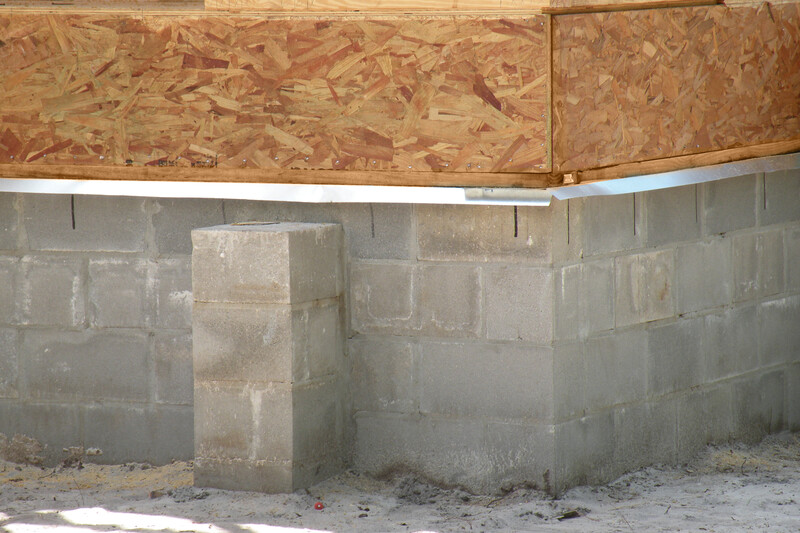
Rim board is the trusted choice for engineered wood floor systems, delivering greater dimensional stability, higher strength, and more consistent quality than sawn lumber. Rim board may be manufactured with plywood, oriented strand board (OSB), glued laminated timber (glulam), or laminated veneer lumber (LVL). Manufactured to match the depth of wood I-joists and tested to meet rigorous performance standards, it provides reliable transfer of both vertical and lateral loads — keeping your structure tight, compliant, and built to last. 

Why Designers & Builders Choose Rim Board

Designed to match the depth of wood I-joists and other engineered wood framing, rim board delivers the structural performance and dimensional consistency that sawn lumber simply cannot reliably provide.

  • Engineered for use with wood I-joists: Maintains the tight dimensional fit needed for full transfer of axial and lateral loads, unlike sawn lumber rim boards that can shrink up to 1/2 inch in height.

  • Superior structural performance: Greater dimensional stability, higher strength, and more consistent quality than sawn lumber.

  • Versatile across a wide range of applications: Suitable for standard floor framing, spanning openings up to four feet, deck ledger attachment, and fire blocking. 

Common Applications for Rim Board

Rim board is an integral component of engineered wood floor systems, performing a range of structural and code-compliance functions across residential and commercial construction.

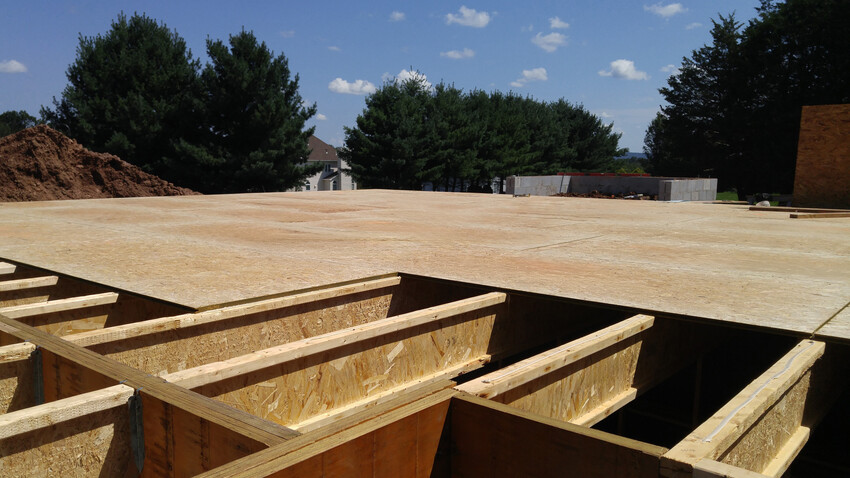
  • Standard floor framing: Fills the space between the sill plate and wall plates, tying floor joists together and transferring both vertical bearing and lateral forces through the floor assembly.

  • Spanning openings: Can be used as a single or double-ply beam to span openings up to 4 feet, depending on applied loads.

  • Deck ledger attachment: Provides a solid connection point for 2x lumber ledgers using 1/2-inch diameter lag screws or through-bolts.

  • Fire blocking: Minimum 1-inch thickness exceeds the 23/32-inch requirement in model building codes, making it suitable for use as a fire blocking panel.

From standard floor framing to fire-rated assemblies, rim board is engineered to meet the demands of modern wood construction.

Selecting & Specifying Rim Board

Selecting the appropriate rim board requires evaluating materials, depth/thickness and load span requirements. The following guidelines can be used when specifying APA Performance Rated Rim Board for residential floor applications.

KEY SELECTION CRITERIA

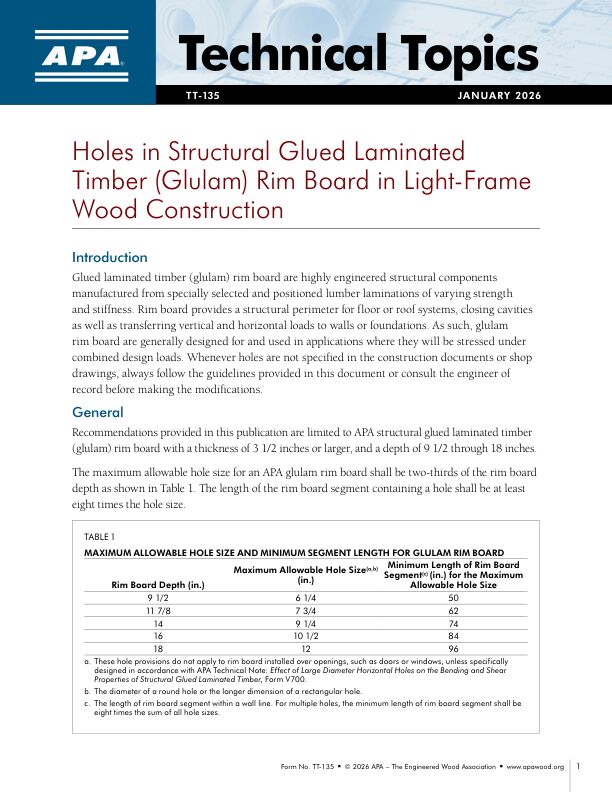
  • Materials: Rim board may be manufactured from plywood, oriented strand board (OSB), glued laminated timber (glulam), or structural composite lumber (SCL), which includes LVL, LSL, and OSL. As glued engineered wood products, they offer greater dimensional stability, higher strength, and a lower tendency to check or split compared to sawn lumber.

  • Rim board sizes: Standard depths range from 9 1/2 to 24 inches, and the rim board must match the depth of the framing members to function properly. Standard thicknesses are 1, 1 1/8, 1 1/4, and 1 1/2 inches, with lengths available from 8 to 24 feet depending on the product.

  • Load span: Rim board grade and size selection shall be based on joist depth and applicable loading using Table 3 of APA Performance Rated Rim Boards, Form W345 and rim boards may span openings up to 4 feet using the allowable uniform loads in Tables 5A or 5B of APA Performance Rated Rim Boards, Form W345. For openings greater than 4 feet, glulam, SCL, or other engineered wood bending members should be used instead.

  • Connections & fasteners: Floor sheathing shall be attached to the rim board using 8d nails (box or common) at 6 inches o.c., and the rim board shall be toenailed to the sill plate using 8d nails at 6 inches o.c. For deck ledger attachments, use 1/2-inch-diameter lag screws (minimum 4-inch nominal length) or through-bolts with washers, staggered in two rows per the spacing requirements of Table 2 of APA Performance Rated Rim Boards, Form W345.

  • Code compliance & performance standards: APA Performance Rated Rim Boards shall conform to ANSI/APA PRR 410 or APA PRR-401, both of which meet or exceed the ICC-ES Acceptance Criteria for Wood-Based Rim Board Products (AC124). As defined in the International Building Code (IBC) and International Residential Code (IRC), the rim board must also comply with ASTM D7672 to satisfy the applicable code definition for engineered wood rim board products.

FULL DOCUMENTATION

For comprehensive specification guidance, load span tables, and technical specifications, download the APA Performance Rated Rim Board Selection & Specification Guide or APA Performance Rated Rim Boards, Form W345.

APA PERFORMANCE RATED RIM BOARD SELECTION & SPECIFICATION GUIDE 

APA PERFORMANCE RATED RIM BOARDS 

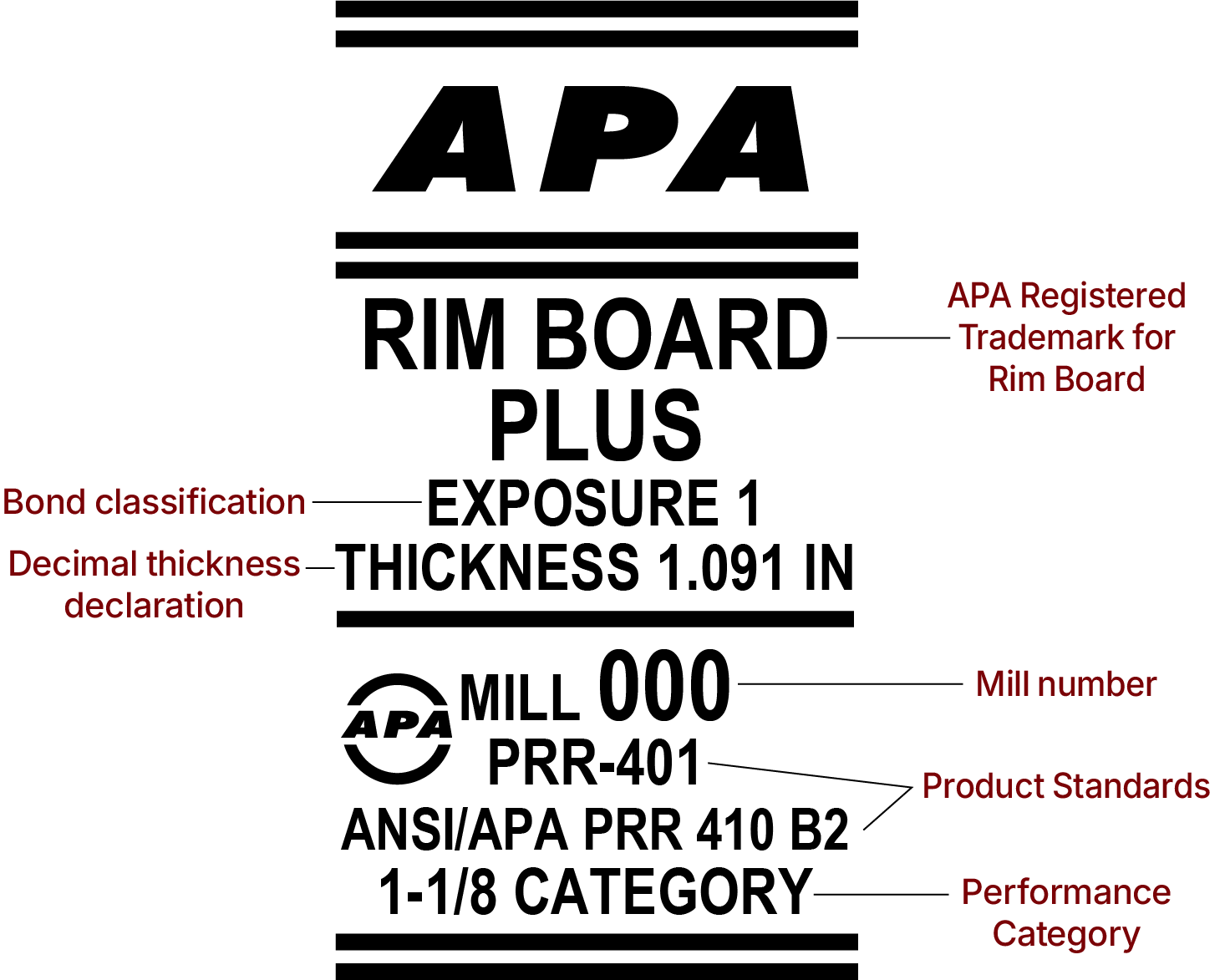
HOW TO READ THE APA TRADEMARK

Understanding the APA trademark ensures you select the rim board that meets the demands of your project.

Reading aN APA rim board Trademark stamp 

APA Performance Rated Rim Board Load Span Tables

Selecting the right rim board begins with understanding the loads it will be required to carry. Rim board must be sized to handle both vertical bearing loads from the wall above and lateral forces transferred through the floor system. The load span tables provided by APA make it straightforward to identify the appropriate rim board size and grade for your application.

VIEW TABLES AND DESIGN PROPERTIES

Complete load span tables are available in APA Performance Rated Rim Boards, Form W345 or refer to the manufacturer’s APA Product Report.

APA PERFORMANCE RATED RIM BOARDS 

APA RIM BOARD PRODUCT REPORTS 

HOW TO USE THESE RESOURCES

APA Form W345, Table 3 - Allowable Design Capacities: Designers can use this table to verify that the selected rim board grade and thickness meets the required horizontal load transfer capacity (H), uniform vertical load capacity (V), concentrated vertical load capacity (P), and lateral resistance (Z). Grade and size selection should be based on joist depth and applicable loading conditions.

APA Form W345, Tables 5A and 5B - Allowable Uniform Loads for Spanning an Opening: These tables can be used when a rim board must span an opening of up to 4 feet, with data for both standard and OSB APA Performance Rated Rim Boards. The designer should identify the rim board size (thickness × depth), determine whether a single or double-ply configuration is required, and locate the allowable total load (lbf/ft) that corresponds to the applicable span length. Minimum end bearing requirements vary by span and must also be satisfied. For openings greater than 4 feet, glulam, SCL, or another engineered wood bending member should be specified.

APA Form W345, Table 4 - Allowable Edgewise Bending Properties: This table provides design values for applications outside the scope of Tables 5A and 5B.
Quality You Can Trust. Backed by APA.

APA member manufacturers produce rim board that meets stringent quality standards verified through APA's rigorous testing and inspection programs. Specifying rim board bearing the APA trademark, manufactured by APA members, ensures you receive products that have been qualified to published performance standards and are backed by ongoing quality assurance testing from a trusted third party.

WHAT APA MEMBERSHIP MEANS

  • Manufactured to recognized U.S and Canadian standards

  • Subject to ongoing quality assurance and product testing

  • Produced by companies with proven expertise in engineered wood products

  • Supported by APA technical resources, evaluation, and industry oversight

FIND A RIM BOARD MANUFACTURER

Use the APA manufacturer directory to locate member manufacturers and explore the range of rim board and other engineered wood products they produce.

FIND APA MEMBER MANUFACTURERS 


Typical Rim Board Trademark Stamps

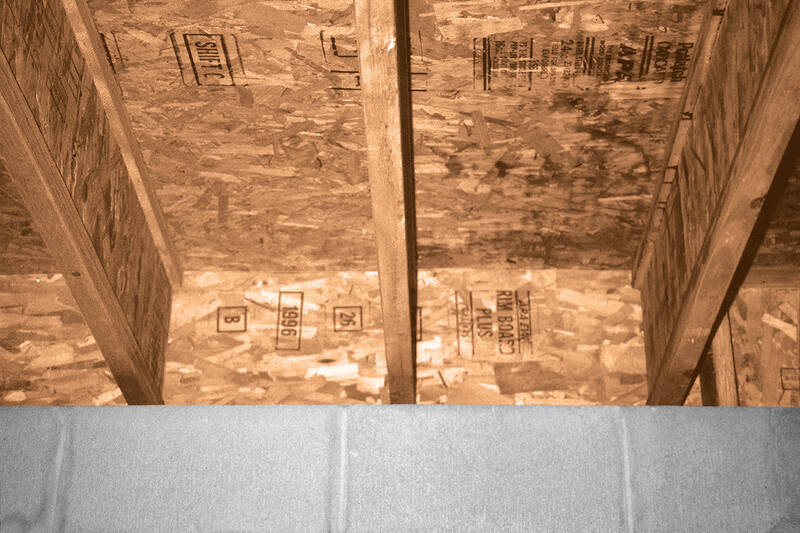
The APA trademark is a quality and performance mark that verifies an engineered wood product meets recognized industry standards and conforms to APA’s stringent, third-party quality auditing procedures. On rim board, the stamp identifies the applicable product standard, intended structural application, and key performance characteristics needed for proper specification and use.

TM-APA-Rim-Board-Callouts

Top Questions from the Field

Can I use sheathing as rim board?

We do not have recommendations for APA Rated Sheathing or APA Rated Sturd-I-Floor for use in rim board applications.

APA Rated Sturd-I-Floor/Rated Sheathing and APA Performance Rated Rim Board are tested for compliance to different performance standards than other panel products. In the case of APA Rated Sturd-I-Floor, OSB panels are manufactured to PS 2. APA Rated Rim Board is manufactured to APA PRR-401 or PRR-410.

When was a standard for rim board developed?

APA Rim Board Performance Standard PRR-401 was first published in June 1997.

Have a Specific Question?

Ask the APA Help Desk