High winds pose a serious threat to buildings, but smart design and construction practices can make a significant difference in storm outcomes. This webinar provides an overview of high wind forces, the importance of a continuous load path, and APA's above-code recommendations for wind-resistant building. Whether you're a designer or builder, you'll walk away with practical, cost-effective strategies to improve the storm resistance of the structures you build.
What you’ll learn:
How high wind forces act on buildings and why a continuous load path is critical to structural performance
APA's above-code recommendations for designing and constructing wind-resistant buildings
How to apply proper connection details to strengthen a building's resistance to storm damage
Key lateral load concepts
How to recognize common failure modes identified through storm damage assessments
What you’ll earn
A downloadable certificate of completion is available after completing a brief quiz
Participants who complete the quiz qualify for 1 AIA HSW/LU and 0.1 ICC CEU
CEUs and certificate(s) received upon course completion are transferrable and may be applied towards PDHs or other general CEUs/certifications, such as PE
Selected questions and answers from the webinar
Is there a single item that you can pinpoint as the most common failure?
Most failures happen at a connection point. We have seen a lot of connection failures lately at the sill and top plates. The connection of wood structural panel sheathing to the sill and top plates along the entire building perimeter, while above code, would likely have helped the performance of a number of the homes observed.
Are the sheathing methods discussed in the webinar achievable with tilt-up wall panels and building components?
Yes, many of these methods are incorporated in factory-built building components.
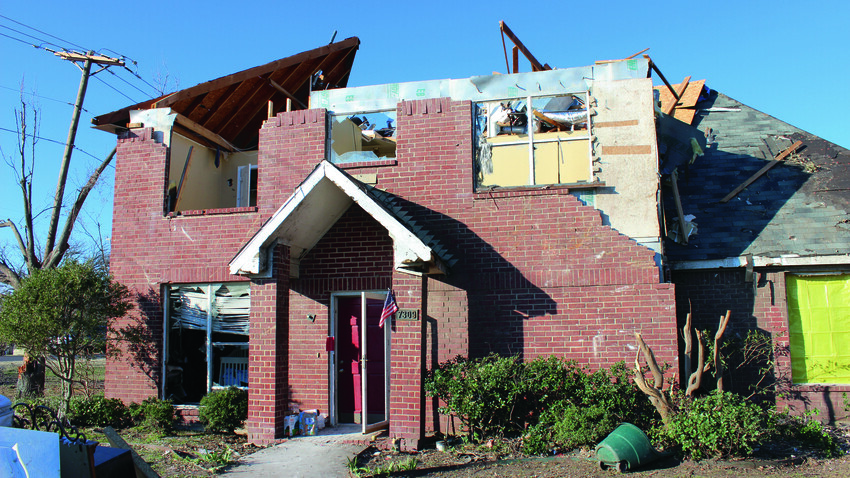
Do you think the brick veneer failures shown are due to incorrect installation?
While we have seen problems due to improperly installed brick ties, it does not comprise the entire extent of the brick veneer failures observed. All structures move during wind events, and tornados are a severe example of this. With observations that involve houses that incorporated both brick facades and flexible wall sheathing, we often see cracking in brick veneer due to the deflection of the structure behind the brick.
Offered by APA — The Engineered Wood Association.