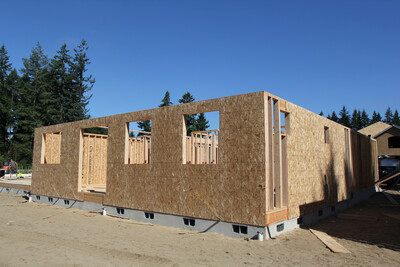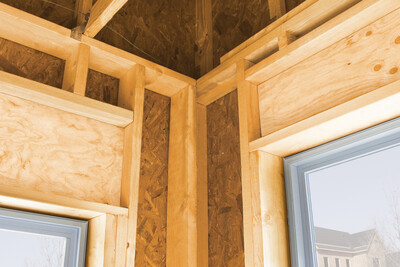
Drawing on hundreds of real-world job site inspections, APA staff have identified the most frequent framing and sheathing errors occurring in today's wood construction market. This webinar examines the consequences of these mistakes and offers practical, field-tested solutions to help you avoid them on your next project.
What you’ll learn:
The most common wood framing and sheathing errors identified through hundreds of job site inspections
The real-world consequences of framing and sheathing mistakes on construction projects
Practical solutions and best practices for preventing these errors in the field
What you’ll earn
A downloadable certificate of completion is available after completing a brief quiz
Participants who complete the quiz qualify for Earn 1 AIA HSW/LU and 0.1 ICC CEU
CEUs and certificate(s) received upon course completion are transferrable and may be applied towards PDHs or other general CEUs/certifications, such as PE
Selected questions and answers from the webinar
Should moisture content of framing materials be field-tested before enclosing with cover materials?
It’s difficult to test every inch of material with a moisture meter, and it is difficult to get an accurate moisture reading of wood material due to the multitude of variations in not only the testing equipment and its use (e.g., calibration, meter drift), but also in the wood itself. Once a structure is complete, wood normally stabilizes to an in-service moisture content between 6 and 14%. At these low levels, moisture has negligible impact on strength, stiffness or durability. However, accumulated moisture can lead to decay and mold growth if it remains greater than 20% for a prolonged period.
Does installing spray foam into the 1/8 inch gap between wall sheathing panels restrict the panel expansion?
Installing anything in the gap, including spray foam, could prevent the expansion of the panel. The 1/8" gap is intended for the panel to expand and does not need to be filled.
Can you use staples instead of nails?
Yes, staples can be used instead of nails. The International Building Code (IBC) and International Residential Code (IRC) specify requirements for sheathing fasteners including staples. There is a table that specifies fasteners, and for staples, it permits wire staples with a minimum 7/16" diameter crown. Also, it is important to note that staples should be installed with the crown parallel to the support below. This helps ensure that both legs of the staple get good embedment into the support.
Offered by APA — The Engineered Wood Association.