Committee Members & Roster
View the ANSI A190.1 Committee Membership Roster
Note that this APA Standards Committee is currently active.
For membership application and call-for-change-proposal, please contact Eric Gu.
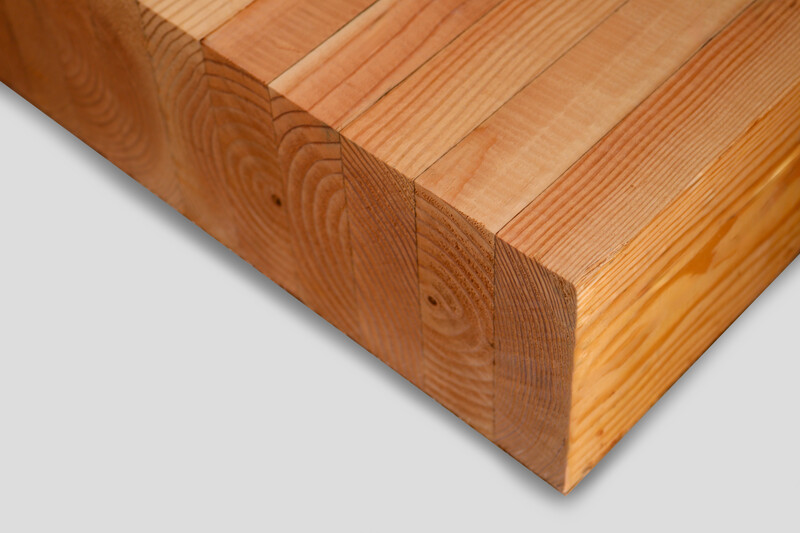
ANSI A190.1-2022 is the American National Standard that establishes nationally recognized requirements for the production, inspection, testing, and certification of structural glued laminated timber (glulam). The standard covers the full scope of glulam manufacturing — including size tolerances, lumber and adhesive requirements, appearance classifications, end and face joint construction, block gluing and product marking — as well as the quality control system that manufacturers must maintain and that accredited inspection agencies must audit. For manufacturers, it defines the minimum production and testing practices needed to certify their product; for architects, engineers, and specifiers, it provides assurance that certified glulam will perform to its published design values; and for code officials, it serves as the recognized basis for accepting glulam in construction.
Note: This APA Standards Committee is currently inactive. Some links or forms may have changed. Contact APA with any questions.
ANSI A190.1-2022 sets minimum requirements for every phase of glulam manufacturing — from the lumber entering the plant to the marks applied to the finished member. It is intended to give material suppliers, producers, distributors, and users a common basis for understanding the characteristics of glulam, while permitting any suitable manufacturing method that produces a product equal to or superior in quality and performance to what the standard specifies.
Applies to structural glued laminated timber (glulam) — an engineered, stress-rated product made from specially selected wood laminations bonded together with adhesives, with the grain of all laminations approximately parallel.
Covers prismatic and curved members, as well as add-on glulam, block-glued glulam, and re-glued glulam.
Addresses both custom members manufactured to individual job specifications and non-custom members produced for general inventory.
Applies to glulam manufactured in a single plant or partly in one plant and partly in another (dual manufacture).
Lumber: Species must be qualified per ASTM D3737 or D7341. Lumber may be visually, mechanically, or proof graded. Moisture content at bonding must not exceed 16% for dry-service conditions.
Laminations and adhesives: Bonding surfaces must be smooth and free of contaminants. Lamination thickness is limited to 2 in. net unless a gap-filling adhesive is used. All adhesives must conform to ANSI 405.
Joints: End joints must be qualified through tension and cyclic delamination testing, with restrictions on knots in and near joints and minimum spacing rules in tension zones. Face joint pressure must be applied uniformly; mechanical fasteners are not permitted in lieu of clamping.
Grade combination establishment and tolerances: Grade combinations must be developed per ASTM D3737 or D7341 and approved by an accredited inspection agency. ANSI 117 layup combinations are recognized. Manufacturing tolerances are specified for width, depth, length, camber, and cross-section squareness.
Appearance classifications: Six classifications (Framing, Framing-L, Industrial, Industrial-L, Architectural, and Premium) govern surfacing, void repair, wane limits, and lamination selection.
Quality control and marking: Manufacturers must maintain a quality control system — including plant qualification, adhesive lot testing, daily testing, and periodic audits by an accredited inspection agency. Products must be marked with standard identification, inspection agency, plant ID, species, combination symbol, and appearance classification.
View the ANSI A190.1 Committee Membership Roster
Note that this APA Standards Committee is currently active.
For membership application and call-for-change-proposal, please contact Eric Gu.
There is no active ballot at this time.
View final ballot information for ANSI A190.1-2022:
December 2021
ANSI A190.1-2022, Standard for Structural Glued Laminated Timber, was approved by ANSI in February 2022 and was retitled from Standard for Wood Products – Structural Glued Laminated Timber. Significant technical changes include:
Add-on, block-glued, and re-glued glulam: New qualification and quality assurance requirements were introduced for these manufacturing methods.
Split end joint correction factors: Correction factors for tension test results obtained from split end joints (Table 4) were added, codifying a practice long used by the glulam industry.
ANSI 117 layup combinations: The layup combinations provided in ANSI 117 are now formally recognized in the standard.
Tabulated shear strengths: Required average shear strengths for adhesive joints are now tabulated by species (Table 2).
Format update: The definitions section was relocated to the front of the standard for consistency with most national and international standards.
A full overview of all previous versions of ANSI A190.1 is available in the Standard.