Committee Members & Roster
View the ANSI/APA PRS 610.1 Committee Membership Roster
Note that this APA Standards Committee is currently inactive.
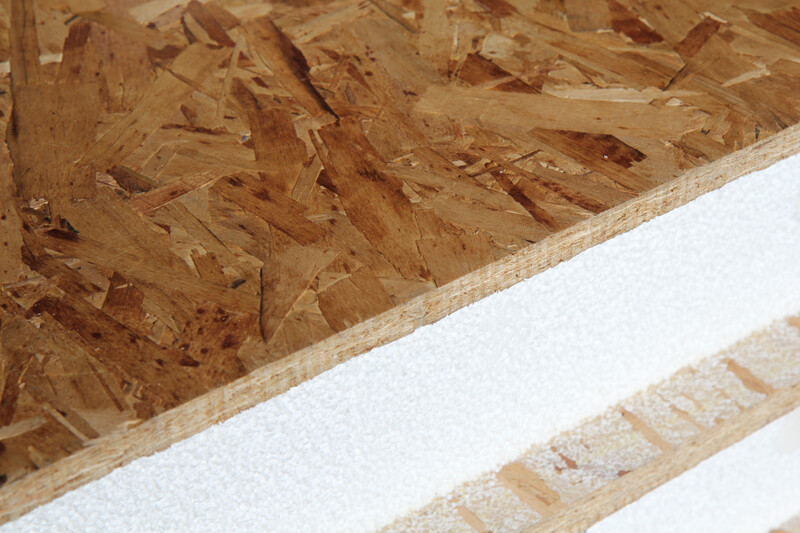
ANSI/APA PRS 610.1-2023 establishes the performance requirements, test methods, and quality assurance criteria for structural insulated panels (SIPs) used in above-grade wall applications. The standard applies to SIPs manufactured with a foam plastic insulation core — either expanded polystyrene (EPS), extruded polystyrene (XPS), or foamed-in-place polyurethane — bonded between two wood structural panel facings such as OSB or plywood. For manufacturers, it defines the qualification pathway to mark products as performance-rated; for specifiers and code officials, it provides a consistent, ANSI-accredited benchmark for evaluating SIP wall panels and lintels against minimum structural, bond strength, and durability requirements.
Note: This APA Standards Committee is currently inactive. Some links or forms may have changed. Contact APA with any questions.
ANSI/APA PRS 610.1-2023 is the American National Standard for performance-rated structural insulated panels (SIPs) in wall applications. It provides manufacturers with the qualification and quality assurance requirements needed to mark their SIP products as performance-rated, and gives specifiers, engineers, and code officials a consistent basis for evaluating SIP wall panels and lintels against tested structural performance criteria.
Applies to structural insulated panels (SIPs) consisting of a foam plastic insulation core bonded between two wood structural panel facings (OSB or plywood)
Covers SIPs intended for use as wall panels and lintels in above-grade wall applications
Addresses resistance to axial, transverse, and racking loads for wall panels, and vertical loads for lintels
Limited to dry service conditions where average equilibrium moisture content of sawn lumber is less than 16%
Requires both panel facings to be the same type and thickness, with the strength axis oriented vertically for walls and horizontally for lintels
Core materials: Must be EPS, XPS, or foamed-in-place polyurethane meeting specified physical property, density, and fire performance requirements
Facing materials: Must be 7/16 Performance Category wood structural panels (OSB or plywood) meeting minimum flatwise bending, tension, and density properties
Adhesives: Laminating adhesives must conform to ASTM D7446; foamed-in-place core materials must meet additional durability requirements
Qualification: SIPs must be qualified through either Method A (prescriptive component requirements confirmed by limited full-scale tests) or Method B (empirical full-scale testing across all panel configurations)
Performance testing: Panels are tested for axial load capacity, transverse load capacity, racking resistance, lintel load capacity, bond strength, and construction moisture effects, with minimum test values specified for each
Quality assurance: Manufacturers must follow an in-plant quality manual accepted by an approved agency, with bond tension tests conducted on a production shift basis and periodic re-evaluation of bending strength and stiffness
Certification and marking: SIPs must bear the stamp of an approved agency and be marked with manufacturer identification, manufacturing date, conformance designation (ANSI PRS-610.1), flame spread and smoke-developed indices, and rated direction
View the ANSI/APA PRS 610.1 Committee Membership Roster
Note that this APA Standards Committee is currently inactive.
There is no active ballot at this time.
View the final ballot information for ANSI/APA PRS 610.1:
September 2022:
ANSI/APA PRS 610.1, Standard for Performance-Rated Structural Insulated Panels in Wall Applications, was approved by ANSI in 2023, with editorial changes and reference updates. It is a revision of ANSI/APA PRS 610.1-2018.
A full overview of all previous versions of ANSI/APA PRS 610.1 is available in the Standard.